Safe, Legal Class B Decramastic Roof Removal in Auckland – A Step-by-Step Guide
Class B Asbestos Removal of a Decramastic Roof – Step by Step (NZ Compliant Guide)
If your home has an old Decramastic roof, there’s a strong chance it contains asbestos cement backing, which places it firmly in Class B asbestos removal territory under New Zealand law.
This guide explains how a professional asbestos removalist such as PropertyHelp Ltd safely removes a Decramastic roof, while staying compliant with the Health and Safety at Work Act 2015 (HSW Act) and the Health and Safety at Work (Asbestos) Regulations 2016.
This is written for homeowners who want to understand what should happen on site — and why it matters.
Why Decramastic Roofs Are Treated as Asbestos
Decramastic roofing sheets typically consist of:
- A steel top layer
- A bitumen adhesive
- A fibrous asbestos-cement base
When disturbed, cracked, or mishandled, asbestos fibres can be released into the air. Once airborne, they are invisible, persistent, and hazardous, which is why NZ law tightly controls how this work is done.
Legal Framework (Plain English)
Under NZ law:
- Decramastic roof removal is Class B asbestos work
- Workers must be trained and competent
- A controlled removal method must be used
- The risk to workers, occupants, neighbours, and the public must be eliminated or minimised so far as reasonably practicable
DIY removal or shortcuts can lead to serious fines, stop-work notices, and long-term health risks.
Step-by-Step Safe Work Procedure (How It’s Done Properly)

5
Step 1: Pre-Start Planning
Before any tools come out:
- The roof material is identified and confirmed as asbestos-containing
- A safe work method is briefed to the team
- Neighbours and occupants are informed
- Weather conditions are checked (wind increases fibre spread)
This planning stage is a legal requirement, not paperwork for paperwork’s sake.
Step 2: Site Set-Up and Exclusion Zones
The work area is then secured:
- Ground-level exclusion zones are established
- Asbestos warning signage is installed
- Safe access systems (scaffold or edge protection) are put in place
This prevents fibres spreading and keeps the public safe.
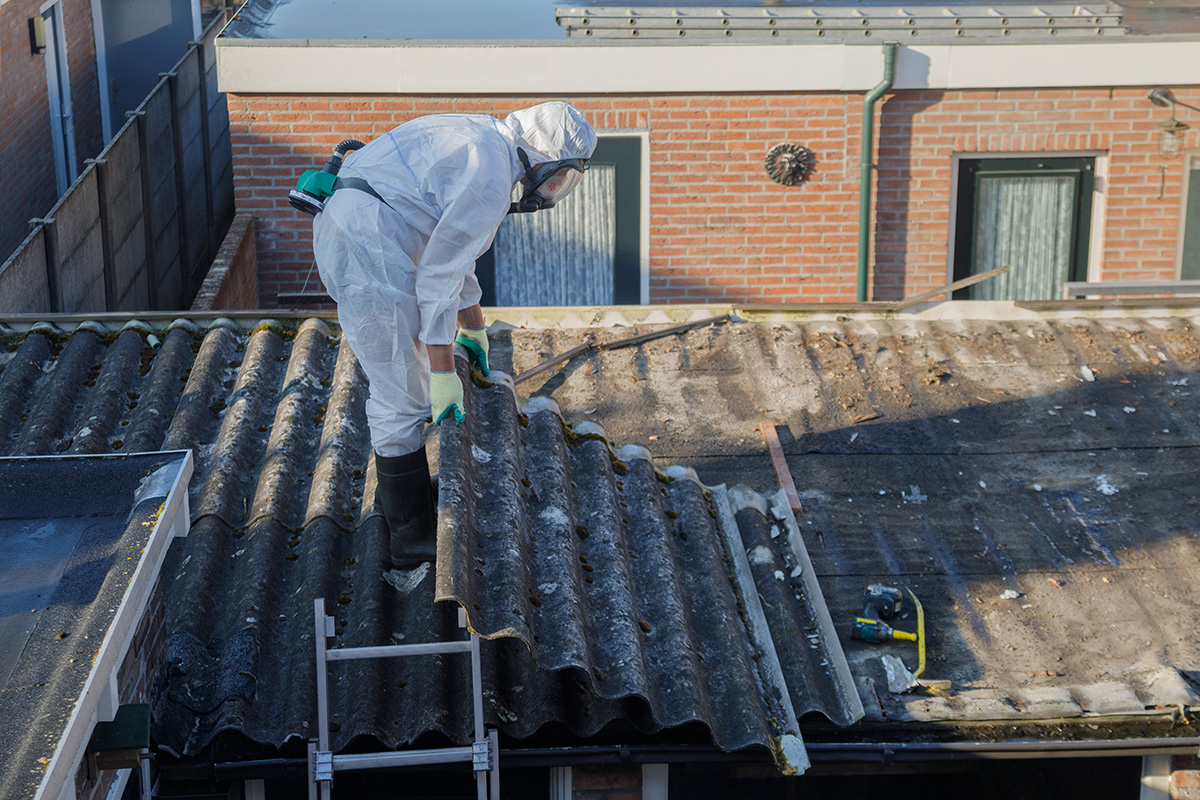
Step 3: PPE and Respiratory Protection
Before removal begins, workers suit up in:
- Disposable asbestos coveralls
- Fit-tested P2 or P3 respirators
- Gloves and eye protection
- Controlled footwear or boot covers
This is essential under the Asbestos Regulations 2016.
Step 4: Wetting the Roof
Dry asbestos is dangerous asbestos.
The roof sheets are:
- Lightly misted with water and surfactant
- Kept damp throughout removal
- Never water-blasted or pressure washed
This suppresses fibre release at the source.
Step 5: Sheet Removal (No Breakage)
This is where experience matters:
- Fixings are removed by hand only
- Sheets are lifted whole, not broken
- No cutting, grinding, drilling, or snapping
- Sheets are lowered carefully, never dropped
Breaking sheets is one of the most common — and dangerous — mistakes.
Step 6: Wrapping and Waste Handling
Once removed:
- Sheets are wrapped in 200-micron plastic
- Seams are sealed and labelled as asbestos waste
- Waste is stored securely before transport
- Disposal is at an approved asbestos landfill
This ensures asbestos never re-enters the environment.
Step 7: Decontamination
Before leaving site:
- Tools are wet-wiped
- PPE is removed in a controlled order
- Disposable PPE is treated as asbestos waste
- Hands and face are washed thoroughly
No one leaves contaminated.
Step 8: Final Inspection and Clearance
The job isn’t finished until:
- A visual inspection confirms no debris remains
- Any minor residue is sealed
- Barriers and signage are safely removed
Only then is the area handed back to the homeowner.
Why You Should Use a Professional Asbestos Removalist
Engaging a licensed, experienced company like PropertyHelp Ltd means:
- Work is lawful and defensible
- Your family and neighbours are protected
- The job won’t be shut down by WorkSafe
- You avoid long-term health risks and future liability
Asbestos mistakes don’t show up immediately — but when they do, they’re permanent.
Final Word
Decramastic roof removal is not just a roofing job — it’s a controlled hazardous materials operation. When done properly, it’s safe. When done wrong, it can contaminate an entire property.
If you’re planning roof replacement or renovation, make sure asbestos is dealt with once, properly, and legally.
Make Enquiry