Hazardous Substances Compliance for NZ Farmers – Why a HazSubs Gap Analysis Matters
Hazardous Substances on NZ Farms: If You Don’t Know What’s in the Shed, You’re Guessing

 4
4
Take a walk around most farms and you’ll see it straight away.
A few drums of diesel beside the workshop.
Spray containers stacked in a corner.
Acid for the dairy shed.
Drenches and treatments sitting on shelves.
Old chemicals left behind by the previous owner.
Nothing unusual.
But here’s the thing many farmers don’t realise until someone points it out:
Every one of those products falls under New Zealand’s Hazardous Substances rules.
And if you don’t know exactly what you have, where it’s stored, and what the risks are, you’re operating half blind.
This is where a Hazardous Substances gap analysis becomes one of the most valuable things you can do for your farm business.
Hazardous Substances Are Part of Modern Farming
Today’s farms rely on chemicals and fuels to keep things moving.
Typical hazardous substances found on farms include:
- Diesel and petrol
- Agricultural sprays and herbicides
- Fertilisers and additives
- Dairy shed acids and sanitisers
- Animal drenches and treatments
- Cleaning chemicals
- LPG and gases
They’re essential tools. But they also come with responsibilities.
Under NZ hazardous substances regulations, farmers are expected to manage these materials safely.
What Compliance Actually Means on a Farm
Hazardous substances compliance isn’t about mountains of paperwork.
It’s about knowing the basics and having systems that make sense.
Most farms should have:
- A Hazardous Substances Register
- Up-to-date Safety Data Sheets (SDS)
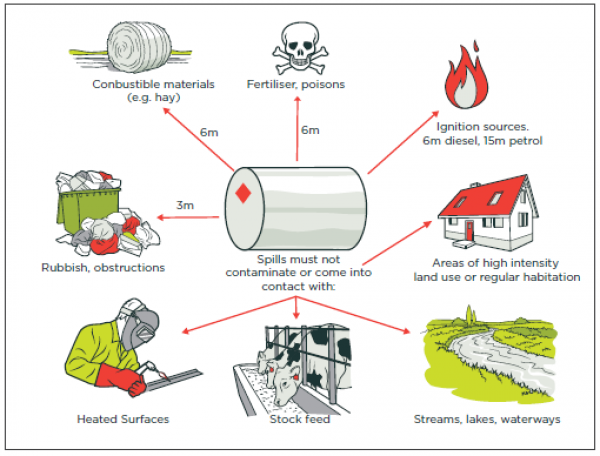
- Correct storage and containment
- Proper labelling and signage
- Suitable PPE for handling chemicals
- Spill response procedures
- Staff who understand the risks
If those pieces are in place, compliance becomes manageable.
If they aren’t, gaps appear quickly.
The Problem: Most Farms Don’t Know Where Their Gaps Are
This isn’t because farmers don’t care.
It’s because things build up over time.
Products change.
Labels fade.
SDS get lost.
New staff arrive.
Storage areas shift.
Slowly, the system drifts.
That’s where a Hazardous Substances gap analysis comes in.
What a HazSubs Gap Analysis Actually Does
A gap analysis is simply a structured look at how hazardous substances are managed on your farm.
It compares:
- What you currently have
- How you currently store and use it
- What the regulations require
From there it identifies:
- Missing registers
- Missing SDS documents
- Storage risks
- Environmental risks
- Training gaps
Instead of guessing, you get a clear picture of what needs attention.
Why Doing This Early Saves Stress Later
Many farms only think about hazardous substances when:
- A spill happens
- Someone gets injured
- A regulator asks questions
- Insurance wants documentation
At that point the pressure ramps up fast.
A gap analysis done early gives you time to fix issues calmly instead of reacting under stress.
How ChemMatrix Helps Farmers Get It Right
This is where ChemMatrix can make life easier.
ChemMatrix works with farmers to help them understand and manage their hazardous substances properly.
They can help you:
- Identify all hazardous substances on the farm
- Build a compliant Hazardous Substances Register
- Match each product with the correct SDS data
- Review storage areas and containment
- Identify compliance gaps
- Develop practical improvement plans
The goal isn’t to overwhelm farmers with rules.
It’s to build a system that works in the real world of farming.
The Real Benefits for Farmers
When hazardous substances are properly managed:
- Workers are safer
- Environmental risks drop
- Stress during inspections disappears
- Insurance confidence improves
- The farm runs more professionally
It also protects the land — which is usually the most valuable asset a farmer owns.
Final Word for Farmers
Hazardous substances are part of running a modern farm.
The risk isn’t having them.
The risk is not understanding them.
A HazSubs gap analysis shows you where the weak spots are before they turn into real problems.
And with guidance from professionals like ChemMatrix.co.nz, farmers can move from uncertainty to control — step by step.
Because good farming isn’t just about production.
It’s about protecting the people, the land, and the future of the business.
Make Enquiry