What Type of Asbestos Is in Old Fences? And How Class B Asbestos Fence Removal Is Done Properly in NZ
What Type of Asbestos Is in Fences? (The Bit Most People Get Wrong)
If your fence was built before the late 1980s, there’s a very good chance it contains asbestos cement. And no — it’s not the “safe kind”, despite what you may have heard at the pub or from a well-meaning mate.
Most asbestos fences in New Zealand are made from asbestos cement sheets, which typically contain:
- Chrysotile (white asbestos) – the most common
- Occasionally small amounts of amosite (brown asbestos)
These fibres were mixed into cement to add strength, stiffness, and weather resistance. That worked brilliantly — which is why these fences are still standing 40–60 years later. The problem starts when they’re disturbed, cracked, or removed.
Once broken, asbestos cement doesn’t stay cement. It becomes dust and fragments, and that’s where the risk lives.
Why Asbestos Fences Are a Sleeper Hazard
Asbestos fences are risky because they’re usually:
- Sun-baked and brittle
- Cracked at ground level
- Set directly into soil or concrete
- Right on boundary lines with neighbours
When an asbestos fence snaps, fibres don’t just vanish. They drop into soil, cling to grass, and move with foot traffic and wind. That’s how a simple fence job quietly contaminates a section.
The Legal Reality in New Zealand (No Grey Areas)
Under the Health and Safety at Work Act 2015 and the Health and Safety at Work (Asbestos) Regulations 2016:
- Removing asbestos cement fencing is Class B asbestos removal
- Fibre release must be prevented, not cleaned up later
- Workers must be trained and competent
- Poor handling can expose homeowners to enforcement action and liability
Whether you’re paid or unpaid, once asbestos fibres are released, the damage is done.
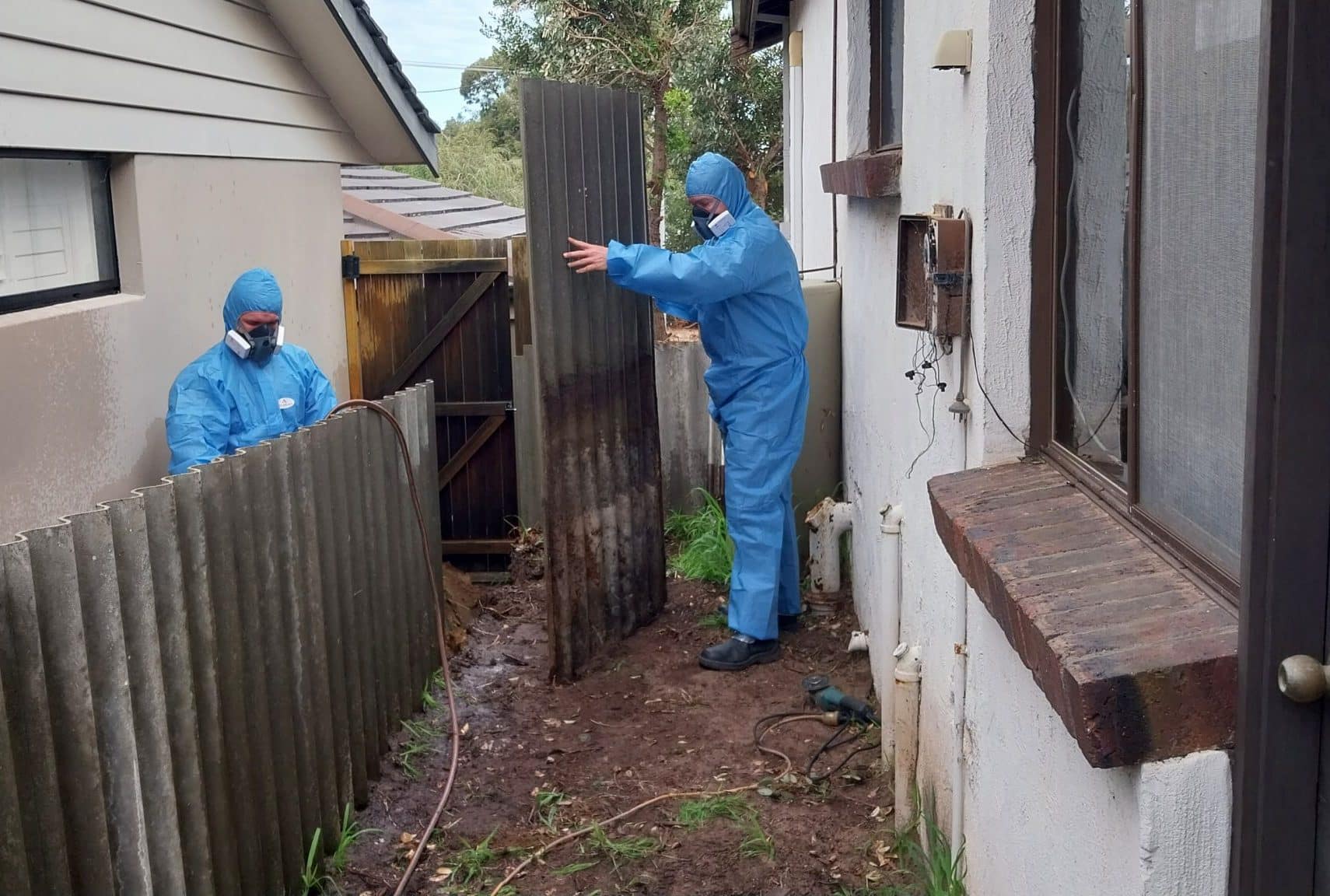
Step-by-Step Safe Work Procedure – Class B Asbestos Fence Removal

5
Step 1: Assume the Fence Contains Asbestos
Before anything moves:
- Fence panels are treated as asbestos cement unless testing proves otherwise
- Condition is assessed for cracking, weathering, and ground movement
- The removal method is planned to keep panels whole
Hope is not a control measure.
Step 2: Establish the Work Zone
A proper setup includes:
- Ground-level exclusion zones along the fence line
- Asbestos warning signage
- Restricted access for neighbours, pets, and bystanders
- A planned path for waste handling
If someone can lean on the fence while you’re working, the setup has failed.
Step 3: PPE Goes On Before Contact
Anyone handling asbestos fencing wears:
- Disposable asbestos coveralls (Type 5/6)
- Fit-tested P2 or P3 respirator
- Gloves and eye protection
- Controlled footwear or disposable boot covers
This is the minimum, not the deluxe option.
Step 4: Wet the Fence Panels
Dry asbestos is dangerous asbestos.
Fence sheets are:
- Lightly misted with low-pressure water
- Kept damp throughout removal
- Never water-blasted, sanded, or scrubbed
Water keeps fibres anchored.
Step 5: Release Panels Slowly by Hand
This part is slow on purpose:
- Fixings are loosened by hand only
- No grinders, drills, or impact tools
- If panels are set into concrete, the ground is carefully exposed rather than forcing the sheet
Force breaks sheets. Broken sheets release fibres.
Step 6: Lift and Lower Panels Whole
Panels are:
- Lifted carefully off rails or posts
- Supported to avoid flexing
- Lowered intact — never snapped or dropped
If a panel cracks, work stops immediately.
Step 7: Wrap and Seal Immediately
As soon as a panel is down:
- Wrapped in 200-micron plastic
- Fully sealed and taped
- Clearly labelled as asbestos waste
- Stored securely away from access points
Loose asbestos waste is how contamination spreads off-site.
Step 8: Decontaminate Tools and People
Before leaving site:
- Tools are wet-wiped
- PPE is removed in the correct sequence
- Disposable PPE is treated as asbestos waste
- Hands and face are washed thoroughly
No one leaves carrying fibres home.
Step 9: Final Inspection and Handover
The job only finishes when:
- The fence line and soil are visibly clean
- No fragments remain in grass or gardens
- Warning signage is removed safely
- The area is handed back uncontaminated
Why DIY Asbestos Fence Removal Usually Ends Poorly
Asbestos fence panels look manageable. They aren’t.
DIY removals often result in:
- Snapped sheets
- Fibres in soil and gardens
- Neighbour complaints
- WorkSafe involvement
- Cleanup costs that exceed professional removal
Using an experienced asbestos removalist like PropertyHelp Ltd means:
- The work is legal and defensible
- Fibre release is controlled
- Your property remains sale-ready
- You don’t inherit a contamination problem that never really goes away
Final Word
Most asbestos fences contain chrysotile asbestos locked into cement — safe when left alone, hazardous the moment it’s disturbed. Removal isn’t about strength or speed; it’s about control, patience, and boring discipline.
If your fence looks old, cracked, or suspicious, treat it as asbestos until proven otherwise — and remove it properly the first time.
Make Enquiry